Tilapia TIME!
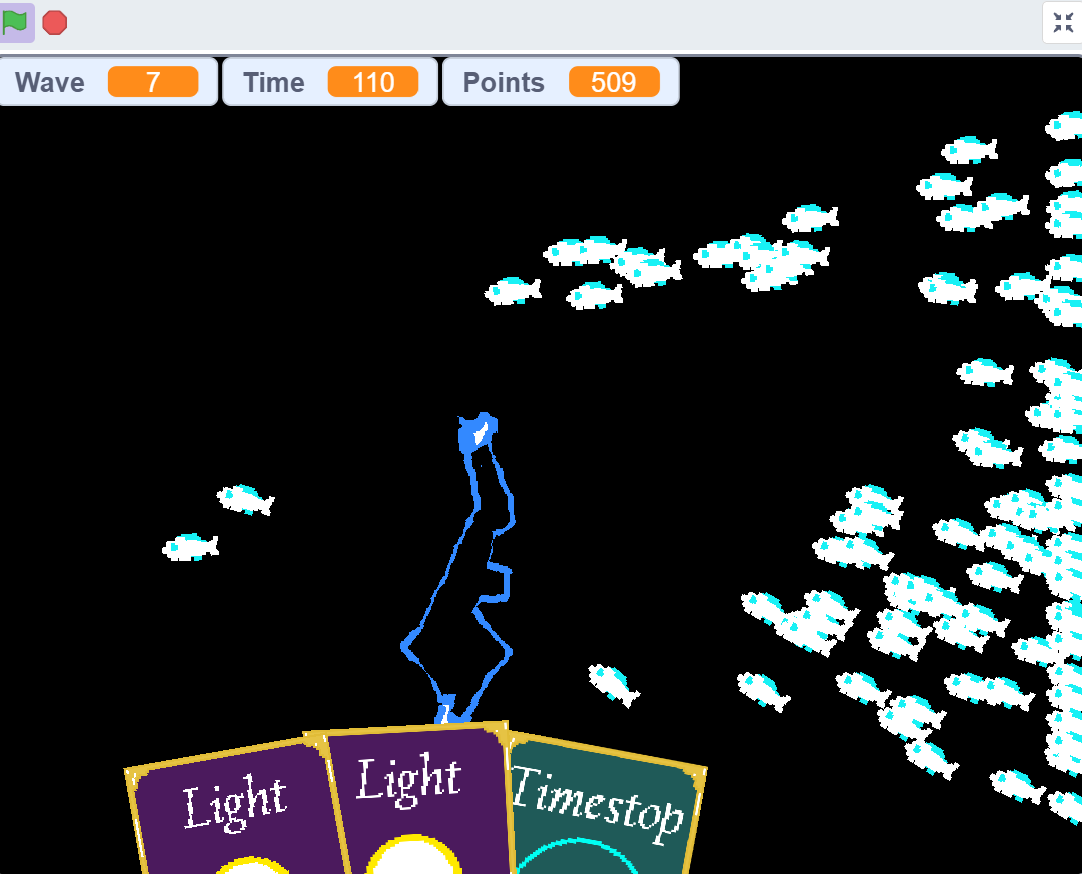
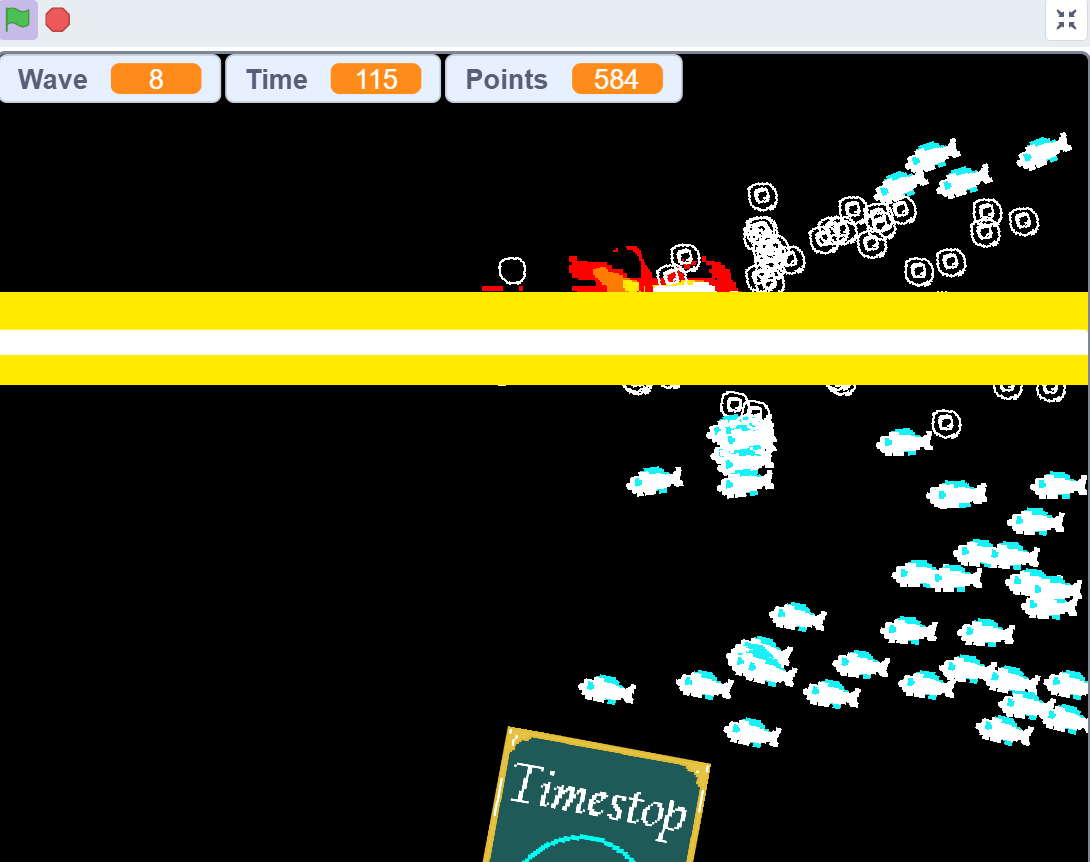
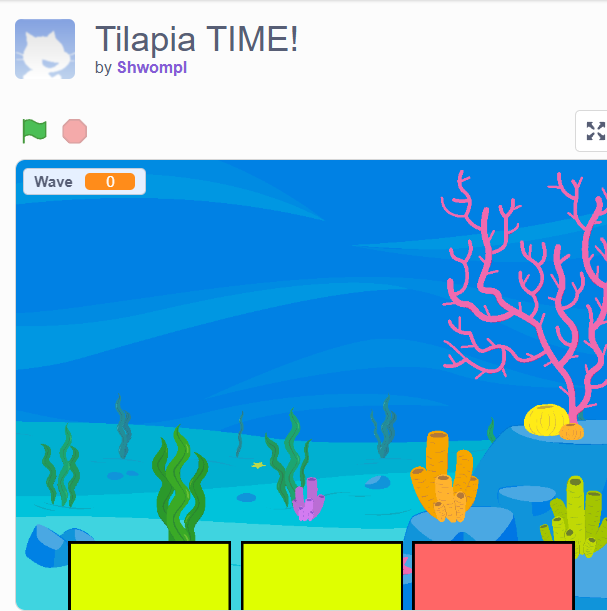
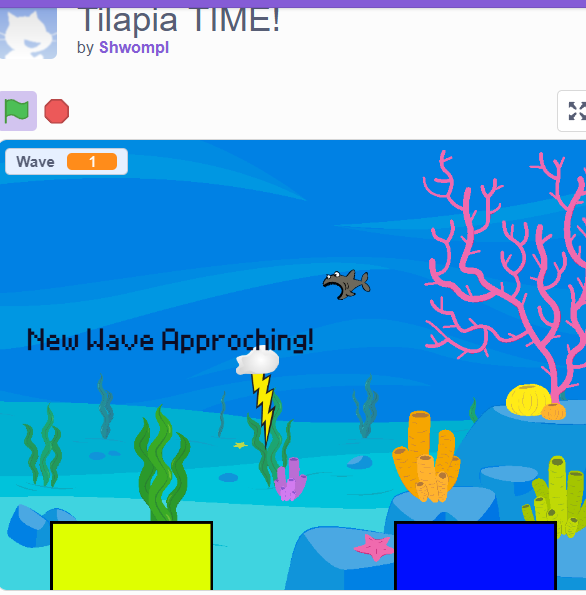
The game prompt from the competition was to focus on issues that happen often in Hawai’i. So my team and I decided to develop a game about invasive species attacking the coral reef on Maui. We decided to use tilapia as our invasive species that is attacking the coral reef. The game itself is a horde shooter-like game that takes in cards to stop the tilapia from crossing over to the other side of the screen to reach the coral reef. The first and second iterations were developed in Scratch, but the first iteration used Scratch’s pre-made images as placeholders for the cards, effects, sounds, and the fish. The second iteration used original artwork for the cards, effects, sounds, and fish. The first iteration of the game was submitted to the competition at the time, while the second iteration of the game expanded on top of the first game with additional power-ups to the cards’ effect, and added a new time stop card. However, the second iteration of the game was used as a way to create a game as a hobby rather than making it for competition.
When going over the roles, I was assigned as assistant programmer and beta tester for the game. In the first iteration of the game, my team and I had only five hours to work on it at night before submitting for judging, and we decided to do a simple game within that time. When going through my role for the first version of the games, I helped my project manager with developing the code, gave advice on where he should code the game, and helped with fixing any bugs that were made in the code. In the second iteration of the game, I was just a beta tester for the game that helped with spotting any bugs that needed to be addressed to the game creator so he could fix them in his code, where he later reuploaded the new version of the game.
Getting to help create these has let me learned that it really sucks to make a game work under five hours before competition, and we needed more time to make it look nicer to present to the judges for the first version of the game. Secondly, I learned that during the second iteration of the game, it was fun to beta test for the game and to find bugs or glitches that needed to be fixed, and fixing these small errors will make the game run more smoothly. Finally, I learned that in both games, it is important to communicate any errors or bugs to make the game run smoothly and to have fun playing the game afterward without any worries about having issues with the game.
Here is the game link to Tilapia TIME! (REAWAKEN) (2nd iteration): https://scratch.mit.edu/projects/1112525545/
Here is the game link to Tilapia TIME! (1st iteration): https://scratch.mit.edu/projects/1111655525